Mold Removal in Treasure Island, FL
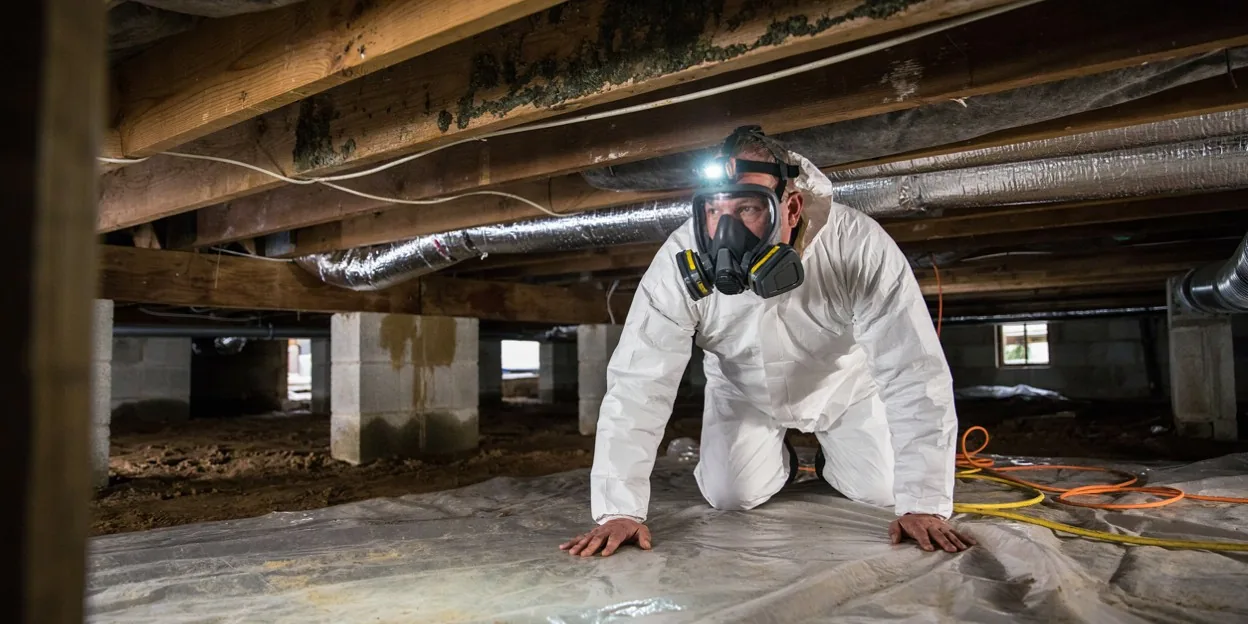
Treasure Island is a barrier island city of about 6,500 people between Madeira Beach and St. Pete Beach, reached from St. Petersburg by the Treasure Island Causeway. The housing is 1950s and 1960s single-story block houses on the finger canals of Isle of Capri and Paradise Island, mid-century motels and condos along Gulf Boulevard, and newer elevated houses on Sunset Beach at the south end.
Helene's surge on September 26, 2024, went through the island. Emergency crews afterward filmed boats piled on top of each other in yards, and the whole island stayed closed to residents for days while the sand and debris were cleared. Ground-floor units and the old block houses on the canals took salt water in every room. Milton's wind followed on October 9.
Call us from Treasure Island and we put you through to an independent local mold provider who reads the walls with a meter before writing a scope.
Canal houses, ground-floor condos, and what Treasure Island owners are asking
A canal-front block house that stood in bay water is whole-home mold remediation work, with every exterior wall opened above the water line and the block cleaned of salt. A ground-floor condo with growth along the shared wall is mold removal, and the association will want the moisture readings in writing. A unit that was rebuilt quickly and smells again this summer is mold odor removal, and the search starts in the block.
Island permits and the beach communities around you
Treasure Island issues its own building permits, and after Helene and Milton the city, like its neighbors, has been applying the substantial damage rules to flooded houses, so ask the building department about your property before the repair scope is final. The island's businesses are organized through the Tampa Bay Beaches Chamber of Commerce, which covers the string of Gulf beach towns from Tierra Verde north to Clearwater Beach, every one of which saw the same water in September 2024.
Call (727) 382-7755 now and tell us what you see in your Treasure Island home.
Services Available in Treasure Island
Mold Removal
Growth on drywall after surge water, a supply-line leak, or a window that took sideways rain: room sealed, wet board cut at the meter line, framing cleaned and dried.
Black Mold Removal
A dark patch on a bedroom wall or closet ceiling handled by how far the water traveled, not by its color: containment, porous material out, leak fixed before closing.
Whole-Home Mold Remediation
A house that took Helene surge or sat shut for a season, mapped room by room, with every wet wall, cabinet, and floor handled as one project under one scope.
HVAC Mold Cleaning
Coil, drain pan, blower, and condensate line cleaned or replaced when the air handler in a St. Pete closet or garage sweats through a nine-month cooling season.
Bathroom Mold Removal
Growth behind a vanity, under a shower pan, or on a plaster ceiling with no fan in a 1920s bungalow bath, removed with the leak or the venting fixed first.
Attic Mold Remediation
Growth on roof decking under shingles Milton lifted, or around a sweating duct in a block ranch attic, cleaned once the roof and insulation are dealt with.
Mold Odor Removal
A musty smell in a house that looks fine, traced to the wet material under a floor, behind a cabinet, or inside a block wall, then removed and treated.
Mold Damage Repair
Drywall, baseboard, cabinet bottoms, and ceilings put back after removal, once the slab and framing read dry and the water source is repaired.