Bathroom Mold Removal in St. Petersburg, FL
You have painted the bathroom ceiling in the Kenwood bungalow twice, and the gray speckles are back above the tub again. The window sticks, there is no exhaust fan, and the wall behind the vanity feels cool and damp to the touch. This site connects you by phone with an independent local provider who does bathroom mold removal in St. Petersburg and the rest of Pinellas County.
Plaster, lath, and the wall behind the vanity
A bathroom in a 1920s St. Petersburg house is plaster on wood lath, not drywall, and plaster hides water differently. The crew reads the ceiling and the walls with a moisture meter, pulls the vanity if the readings behind it are high, and checks the floor around the toilet flange and the tub trap. In a 1950s block ranch they look at the drywall above the tile line and the wall shared with the bedroom closet.
Then they sort out the cause. Steam with no fan is one answer. A slow leak at the shower valve, the supply stops under the sink, or the drain under the tub is another, and it reads very differently on the meter. The scope is written around which one it is.
Crack the window, skip the paint, and look next door
Stop repainting over the spots; paint seals the moisture in and the growth comes back through it. Run the fan if you have one, open the window after showers, and wipe the tile dry if you can stand to. Do not pull the vanity or cut the wall yourself.
Check the room on the other side of the bathroom wall. A closet or bedroom with a soft baseboard or a stain low on the wall tells the crew the water is a leak and not just steam. Shut off the supply stops under the sink if they are weeping, and photograph everything before the visit.
What comes out of a bathroom and what stays
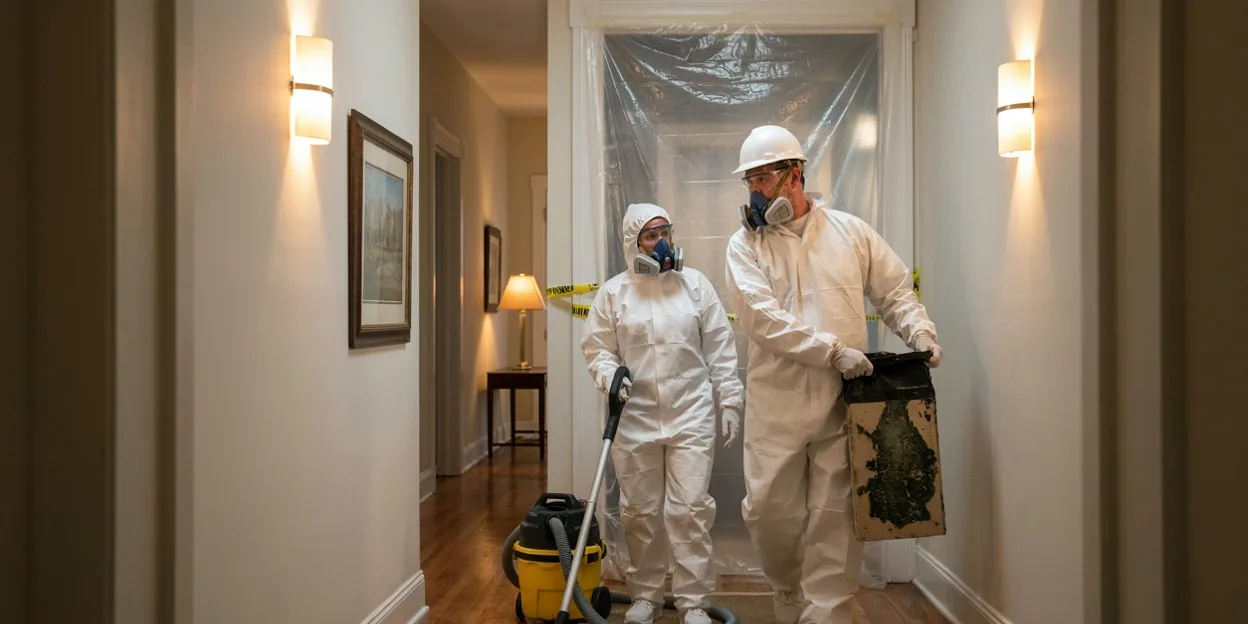
Inside containment at the door, the crew removes wet drywall above the tile, the particleboard vanity base if it has swelled, and any insulation behind the wall. Plaster is handled wall by wall: sound plaster over dry lath stays and gets cleaned; soft plaster over wet lath comes out. Tile, tub, and the subfloor get HEPA vacuumed and cleaned, and dehumidifiers run until the framing reads dry.
The fix is part of the job. A plumber replaces the valve or the trap, or an electrician adds the fan the bungalow never had, before the wall is closed. If the leak soaked the ceiling of the room below, see mold removal. If the smell continues after the bathroom is dry, mold odor removal follows the moisture elsewhere. The new drywall, trim, and paint fall under mold damage repair.
Old Northeast bathrooms, beach condos, and the fan that was never installed
The bungalows and Mediterranean Revival houses in Old Northeast, Historic Kenwood, and Historic Uptown were built in the 1920s with a window for ventilation and nothing else. Add a tiled shower and a long Pinellas summer, and the plaster above the tub stays damp from April until the cold fronts start. In the mid-century condos on the beaches, bathrooms share a plumbing wall with the unit next door, so a leak at your tub can show up as spots on a neighbor's ceiling, and the association will want the readings in writing.
Florida licenses mold assessors and remediators separately under Chapter 468, Part XVI, and for growth larger than ten square feet the same company may not do both on one building within twelve months. Check the remediator at myfloridalicense.com. Many Florida policies cap mold at a fixed amount and treat a long slow leak as maintenance; a sudden pipe failure is read differently, so document the cause. Moving plumbing or adding a fan circuit needs a permit from the City of St. Petersburg or the town or county where the house sits, and the trade contractor pulls it.
When you call about the bathroom ceiling
Have the address ready, along with the age of the house, whether the bathroom has a fan, and whether the spots return after cleaning. Say if the wall behind the vanity or the room next door feels damp. Call (727) 382-7755.