HVAC Mold Cleaning in St. Petersburg, FL
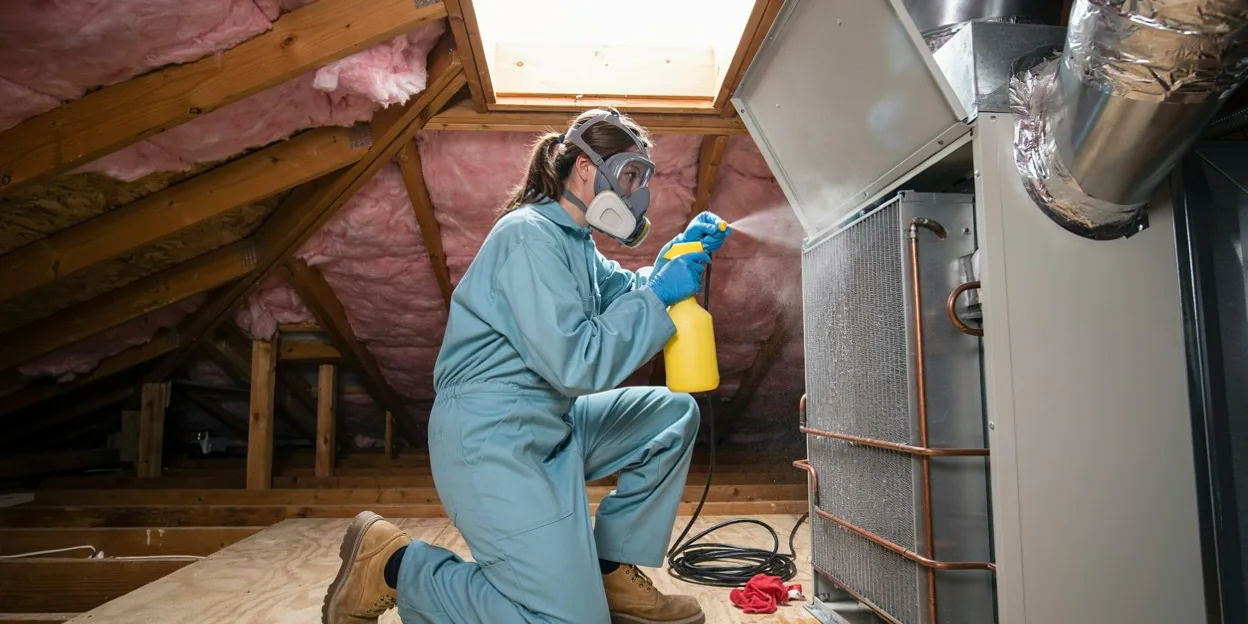
Every afternoon when the system cycles on, the hallway gets a musty puff that fades after a minute. You opened the closet door and the air handler cabinet is sweating, the filter is damp at the bottom, and there is a dark ring around the drain pan. This site connects you by phone with an independent local provider who does HVAC mold cleaning in St. Petersburg and the rest of Pinellas County.
Inside the cabinet, the pan, and the first ten feet of duct
The crew opens the air handler and looks at the coil, the blower wheel, the drain pan, and the insulation lining the cabinet. They check the condensate line for the algae clog that backs water into the pan every Pinellas summer, and they look at the supply plenum and the first run of duct for growth on the inner liner. A camera goes into the ducts if the smell points that way.
They also ask a sizing question. A system too big for the house cools the air fast and shuts off before it pulls the humidity down, which leaves the coil wet and the house damp. That is a common story in a 1950s block ranch that got a larger unit when the old one died.
Keep it running on auto, and clear the drain if you can
Leave the system on. Shutting it off in a St. Petersburg summer lets the humidity climb and makes everything worse. Set the fan to auto rather than on, so the blower is not pushing air across a wet coil between cycles.
If you can see the condensate line outside near the pad, check whether it is dripping. A dry line on a humid day usually means a clog. Replace a damp filter with a dry one, and photograph the cabinet, the pan, and the ring before anyone touches it.
Coil and blower cleaned, lined duct and wet insulation replaced
Inside containment at the closet, the crew cleans the coil and the blower wheel, removes and cleans or replaces the drain pan, and clears or replaces the condensate line. Cabinet insulation with growth on it comes out. Flex duct with growth inside is replaced rather than cleaned, because the liner cannot be wiped. Rigid duct and the plenum can be cleaned and sealed.
If the drip pan overflowed into the closet wall or the hall ceiling, that drywall is read and handled under mold removal. If the smell traces to the attic rather than the cabinet, the job shifts to attic mold remediation. When the smell lingers after the equipment is clean, mold odor removal goes looking for the wet material still feeding it.
Garage air handlers, beach condos, and the Pinellas cooling season
St. Petersburg cools from March into November, and outdoor humidity rarely drops below seventy percent in summer. In the block ranches across Pinellas Park, Seminole, and Largo, the air handler often sits in the garage, where it pulls hot, damp air through every gap in the cabinet and sweats. In the mid-century condos on Treasure Island and St. Pete Beach, the unit is in a closet or above a ceiling, the drain line runs a long way to a shared stack, and the association may own part of it.
Florida licenses mold assessors and remediators separately under Chapter 468, Part XVI; for growth larger than ten square feet the two roles may not be the same company on the same building within twelve months. Check the remediator at myfloridalicense.com. Replacing an air handler or ductwork needs a mechanical permit from the City of St. Petersburg or the town or county where the house sits, and the HVAC contractor pulls it. Many Florida policies cap mold at a fixed amount; a slow condensate leak is often treated as maintenance rather than a covered loss, so ask your adjuster before counting on it.
When you call about the air handler smell
Have the address ready, along with where the air handler sits, whether the drain line is dripping outside, and when the smell started. Say whether the ceiling or wall near the closet is stained. Call (727) 382-7755.